Thursday, December 12, 2013

Greener grass

It's interesting how time manipulates the mind. For the most part, I'm in favor of this. The days after my beloved dog Clyde died, I thought the world was cruel for going on. How could it ignore the passing of such a sweet creature? One that had selflessly seen me through the rigors of middle school, the angst of high school, and the loneliness of undergrad! I hated the world for that. But time passed and now, years later, I barely smart at Clyde's memory. It's sweet, but it's not painful anymore.
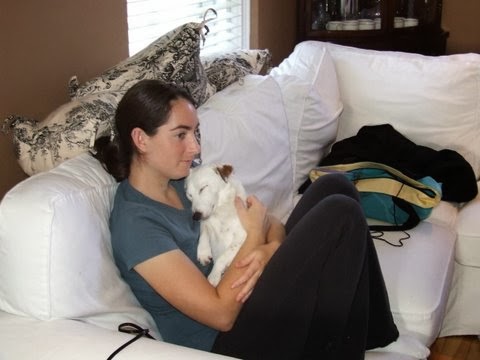
Snuggly Clyde just a few months before he died.
The healing time brings is a gift, but it's passage does one thing I do not appreciate. As I flip flop from living in PNG to living in the US, I only remember the wonderful things about the place I'm not currently living. It's "the grass is greener" effect and it drives me batty. A few months ago I hit my wall. I was ready to go back to PNG and ever since it's been hard to be here. I'm thoroughly enjoying time with family, but my life is there and it's perfect there... right? I mean, I only remember it being amazing! Then I start to think...

When we go back, cooking will become a challenge again. We never know what staple is going to suddenly go missing from the country. It could be oats. Or it could be sugar. Or it could be flour. Not that any of these are necessities, but I do like a good oatmeal cookie. 

When I use flour (which is fairly often) I choose to sift. Many missionaries will scoff at me for this, but if I can get rid of bugs, I'll do it. I haven't sifted a bag of Flame Flour yet that hasn't had some wriggly worms or black boll weevils in it. Wriggly as in "still alive." Gross. Again, this is a time-consuming and frustrating process that I choose to put on myself. However, it is really nice to be in the States where I can both choose to not sift and know that my flour is relatively protein-free.

When we return, I'm going to sweat in places I forgot existed... in the middle of the night. It's hard to remember what it's like to sit in sweltering heat 24/7 when you're enjoying the wonders of temperature controlled housing. I do remember sitting and staring at Brian while we wallowed in our shared misery on a Saturday afternoon, but it's such a distant memory. I have to really think hard and, even then, surely it wasn't as bad as all that!

When I go to do laundry that first time, it's going to hurt. There's just something about being able to do your laundry whenever you want to, day or night. Doing load after load of diapers in our quasi-outdoor washing machine and then hanging them on the line, hoping for sun, is going to wear on me. 

Let's keep on the theme of machines: the dishwasher. I do remember nights where the cares of the day and the heat of the night combined to create combustible stand-offs between Brian and myself. Only one could stand at the sink, so who would it be? Sometimes we were gracious and volunteered…. and sometimes not so much. 

I could easily continue this list and do the same of living stateside. There are lots of hard things about being here that I totally forget about once I'm in PNG grunting through the incomplete list above. And in reality, it's not time manipulating me, but one of those fallen humanity things that causes the "grass is greener" effect. Living with a foot in two worlds is hard, but it gives me the opportunity to embrace an attitude of being discontent or embrace an attitude of acceptance. I wish I always took the easy road and chose to gracefully accept what God has put directly ahead of me, but alas. I'm Hannah and will always battle Hannah. Fortunately for me, His grace is greater.  

Monday, November 25, 2013

Finding my way

Sometimes I wonder if I missed my calling in life. What was I really supposed to be when I grew up? A writer? A dog trainer? Working my way through the ranks of a therapeutic horseback riding stable? A teacher (eek!)? If I opened the door of unchosen professions wider, we'd start seeing wisps of Hannah on exotic archaeological digs, or Hannah as a stodgy old museum curator wandering dusty halls, or Hannah the college professor publishing historical papers as a hobby (I particularly like her stylish yet professional glasses). 

I talked myself out of every single one of those occupations, mostly because I didn't think I could cut it. I couldn't cut it, and about a million other more qualified, passionate, brilliant people were doing the same thing. So why should I even try? It's a horrible way to go through life and I almost missed out on one of the most fulfilling jobs I could have encountered by being that way. The first time I went to PNG I met (and secretly longed to be) the PNG survey team. They were all gifted, intelligent, and doing something that certainly qualified as the perfect job, in my estimation. They were writers completing reports after each survey that detailed the people group they visited. This involved analyzing lots of language data, but it also involved simply sharing about the people and their history. They were museum curators, occasionally collecting data on dying languages and archiving the data for future generations. They were a strange new breed of researcher that embodied my admittedly faulty view of a high-level archeologist, traveling from remote location to remote location discovering hidden bits of the world. They were teachers, using their skills during furlough to raise up new surveyors. They were not dog trainers or stable managers, but I could forgive that because I imagined these superpeople took up such activities as hobbies. They were language surveyors and what they did was an inviting mystery to me. But there was no way I could do it.

I'll never forget the day I was bouncing along the Highlands Highway after a weekend trip to a coastal town. We were heading back to Ukarumpa after a delightful time away, stuffed into a small van. I was sitting in the very back between two single people just beginning to learn of their attraction to one another. It was fun to people-watch their interactions as they danced around touchy topics, but I also rather wished they had just sat next to one another instead of talking over my lap. Directly in front of me was the head of the survey team. He asked how teaching was going and various other distracting questions about my history. He then asked about my long-term plans and whether PNG was included in them. I thought rapidly about talking to him of my interest in survey, but I was scared he would make it clear that my kind wasn't welcome in survey (I can have some pretty crazy thinking occasionally... just occasionally). Of course he didn't say I was too dull a crayon for survey, or even remotely indicate the idea was meritless. Instead, he asked for some details of my plan and then nonchalantly stated that it was sound.  

Here we were using a visual tool to ask people what langauges they use in various church activities.
The unlooked for encouragement was all I needed to push me over the edge. His casual response to what I'd been thinking about for weeks is what finally started the snowball that landed me back in PNG doing my dream job. I've found something else now that's even more delightful and fulfilling, but I plan to always be part of the survey process in PNG with Brian. Ray is certainly a consuming boss, but when we get back we'll work out a balance between my new life as Mom and my old life as surveyor. And when those wondering thoughts enter my head, I'll just look at the little girl and remember the path that, by God's grace, brought Brian and her into my life. Nope, self, you didn't miss your calling. 

Wednesday, November 13, 2013

Oh, Wilma


When we first met her, Wilma was a spunky 3 year-old fully representative of the Papua New Guinean ideal of a toddler. She sassed everything, whether animate or inanimate. She took what she wanted and did what she wanted. She never accepted "no" as the final answer. If "no" became the final answer, she ignored the adults and forged ahead with her plans. Everyone in the village knew where Wilma was located at any time, because not even the jungle could squelch her enthusiasm. I watched her epic meltdowns and displays of domestic dominance in horror, never sure how to react.

Raising children is one of those cultural things I erroneously viewed as universal. I used to believe that there are certain behaviors no one could possibly tolerate, no matter how your life experiences have shaped you. After experiencing Wilma (because she is an experience), I realized that my preconceptions about universal parenting are false and based on my cultural lens. Though we all have vastly different levels of acceptable behavior for children, our culture defines the parameters for those levels. So when I witnessed PNG's base level of acceptable behavior through the community's reaction to Wilma, I was taken back.

Not only were her dramatic tantrums and misdeeds accepted, they were encouraged. In PNG many groups believe that up to a certain age children have no ability to see outside of themselves. They are selfish beings concerned only with their own wants and needs without the capability of seeing the needs of those around them. It varies, but this stage of life can last until a child is 5 or 6 years old. All the tantrums and disobedience are annoying, but ultimately encouraged as a primal display of strength. That child, the one who yells the loudest and disobeys the fiercest, will make a wonderful adult if handled right in the intermediate years. 

Once a child reaches the age where they are expected to give back to the society that put up with them, a flip is switched. There is very little tolerance for their bad behavior and selfish tendencies. It's hard to watch interactions between adults and the children going through this shift. It's harsh and, again, grating to my American senses. Wilma is currently undergoing an assault to her reign of terrible twos-threes-fours-etc. on two fronts: she has a younger sibling and she has reached "that" age range. The baby is now given rights to unfettered selfishness while Wilma is expected to take responsibility for that baby, since she is deemed old enough. Talk about insult and injury. However, each time we visit Wilma and her family in the village, we see her grow and change. She isn't always happy about giving up her throne to the baby, but she clearly loves this new role of caretaker. 

When I started to learn about parenting the PNG way, I pulled the insensitive West-is-best card (yep, I unfortunately still have that tucked away in my brain) and allowed myself to judge it as, well, wrong. But then I looked at Wilma's older siblings and realized that they are all well-adjusted, responsible, and much more hardworking than I was at their age. There are some major problems with domestic life in PNG, just like there are major problems with domestic life in the US. It's the state of humanity apart from God as sin permeates every aspect of our lives. I fervently pray that my parenting of Ray will not be the PNG way or the way of the West, but instead guided by Biblical directives. In the meantime, I continue to learn about stretching my cultural self through our interactions with Wilma and her older, more level-headed siblings. It'll be interesting to watch her grow into her own as I continue to grow into my own.

Sunday, October 27, 2013

A boy named Sue

Ray Evangeline. It's a name that people either love or hate. We have yet to meet friend or stranger that is capable of hiding their reaction to it. You'll deal with this your whole life; we totally recognize that and accept responsibility for it. So here's why we did it, my girl.

You were good news. Nope... you were great news. We found out just a month before you entered our lives as a tiny embryo that we had between a 1 and 3 percent chance of getting pregnant. Our doctor talked us through godly grieving and implored us not to target one another in the bitterness that sadness can sometimes breed. I was too shocked to have proper time to be sad before God gave us you. From my perspective, your dad was very sad. You'll have to ask him for a more accurate representation of his reaction to the news when you're curious. Regardless of how either of us felt during that month of processing, we were overjoyed (and a little stunned) when God made your presence known. Besides being a lovely name, Evangeline became a natural fit for you because you were our good news.

Ray is a boy's name. Got it. We obviously knew that when we chose it, but we honestly didn't think it would be as difficult for people as it has been. "Rae" has become more common for a girl, so we figured all would be well despite the boy spelling. We also thought that by growing up in PNG, you wouldn't have to deal with the stigma of it being a boy's name. We've never encountered a Papua New Guinean man named Ray. Lots of Johns, Thomases, Stevens, and Andrews, but no Rays. Your dad just finished some work "in the bush" and showed lots of Papua New Guineans pictures of you. They loved you. They were also confused as to why we would give our little girl a boy's name. Hmmmm... oops.

But I'm not going to apologize to you for the explanations you will constantly be required to give. As you grow into the beautiful woman of God I know you'll be, I hope you'll understand the significance of your name and love having opportunities to explain it. Your grandmother called me her ray of sunshine my whole life, which she shortened to Ray. So you're getting "my" name. I'll be the first to tell you that I was only a ray of sunshine occasionally. I was a serious child often being admonished to be happy or to smile or to stop looking so mean. I didn't intend to communicate tenseness, it was just that my default facial expression was, quite unfortunately, very serious. You, on the other hand, are a naturally happy child. You laugh often and smile almost unceasingly. Where people commented over and over again that I should be happier, they comment over and over again on your gentle demeanor and friendly face. "Does she ever cry???" they ask. Of course you do, but never without a valid reason. I held my smiles close and you pass them out like candy. You truly are your name.

Beyond that, your dad and I desperately want you to be a ray of God's light in a very dark world. Go ahead and grimace at the cheesiness of that statement, but that's the best way I know to say it. We want you to grow to know and love Him to the point that it overflows into the lives of those around you. It's a hard place you've been born into; not a day goes by that I don't hear or read something that makes me sad (and scared) for you. But I also have full faith that God can give you the ability to embrace your name and shine for Him. 

So I'm not sorry we gave you a boy's name. Live up to it and remember whose kid you are every time you have to explain why you're a girl named Ray. 

Brian was thrilled to find some BBQ sauce with Baby Ray's name!


Sunday, October 13, 2013

Cultural hang-ups

Traditional clothing seen on the Rai Coast
It's interesting to me how the western world feels the need to put clothes on naked village children. We have this mindset that all children need to wear clothes because that's obviously appropriate; naked children running around in the world makes us feel sad and is kind of offensive (though we may not admit the latter as a motivator for sending warm clothes to equatorial countries). The same goes for what clothes adults wear and how they wear them. Men wear pants and women wear items that cover all the blush-worthy areas, as we define them. We value clothing and tend to barrel ahead with our "right" views instead of learning about what constitutes modesty for others.

I first started thinking about this when I saw how western clothing translates in a PNG village setting. I stayed with a family on the north coast for five weeks in 2007. They had two sons and two daughters, all of whom stayed more or less fully clothed. The mother and father stayed fully clothed, most of the rest of the villagers stayed fully clothed, and all was right in my world. Then one day I popped over to the family's house unannounced to ask a question about the meal that night. The area of their home designated for cooking was partially concealed, but open enough to invite visitors. Anyone walking by could see in. As I strolled up and called out to the mother, I heard all manner of scrambling. When she peeked her head around I could tell she was throwing on her shirt and was rather embarrassed. I was confused because being topless in PNG is not uncommon, especially for a mother. Why would she be embarrassed? 

After that I started noticing things. I noticed that all the boys in the village wore shorts, even though most of those shorts had a worn out bottom. I noticed the women wearing shirts around me. I noticed the women not wearing shirts in situations where I was not expected to be. I noticed children being dressed in the morning by their parents and then promptly undressing as soon as their parents went to the garden. Overall I noticed that people were trying to communicate that they, too, were respectable by some vague definition of the word they thought I had. I then noticed as time went by that the overtly western cultural rules began to slide and the shirts (gasp!) stayed off.

Based on several articles published about PNG, and general discussions I've had with people about life there, it's obvious that many believe PNG is uncivilized. They base their judgements on what they think a civilized culture should be, and that picture does not include naked children or topless mothers. This mindset over the years, and the cultural hang-ups early missionaries overlaid onto their message, created a legalistic church culture where people are wearing things because that's what it means to be a Christian. It has created profound confusion about what is right and what is wrong. On surveys, I've had many conversations where people expressed their frustration at contradicting rules missionary's have brought or how missionaries have "changed their mind" about what's right and wrong. It's so easy to believe the things we're teaching aren't culturally motivated, but so many of them are. Even something as basic in our minds as what defines modesty. Some things just aren't so black and white as I grew up believing.

PNG is rapidly changing. Part of the change includes the view of clothing and what certain outfits communicate. Regardless of the outcome, I have learned to examine carefully what standards I'm holding up to others. The conversations I've had with confused and frustrated Papua New Guineans over early Christian teachings that emphasized a "do this, don't do that" list based on western cultural norms has further verified in my mind the importance of Bible translation. A major reason they are frustrated is because they haven't been able to test teachings against Scripture, so they are at the mercy of the western whim. And that is not always a nice whim to be at the mercy of.

Monday, September 30, 2013

What defines a home

Before we arrived home for our first furlough earlier this year, I knew the Achilles' heel I would face in the US. I started praying about it well before landing in San Francisco, but it's hard. I'm a nester and I strongly desire a house in which I can nest. The arrival of our bundle of bouncing happiness has only strengthened my nesting urges and I've had no way of fulfilling that urge. It's natural and not in itself wrong, but that one desire sometimes overwhelms me with a mixture of sadness and frustration at the life I'm leading; the one with the home ownership box not checked. 

We lived in six different places the two years that we spent in PNG and each place was, in a sense, full of other people. Bits of their lives and memories were lingering through all the household items left behind. Before we left the States I knew this would be a struggle for me, but God was faithful even in this little thing. He allowed us to create homes in each place that we stayed, even in the transient flats we were assigned to. In fact, I turned nesting into a true art in PNG and Brian certainly helped with several intelligent suggestions about decor (I've intentionally barraged him with episodes of Love It or List It while we've been around television to give him an even sharper eye).

One of our six PNG "homes"

But here in the States... it's rough. All the beautiful homes friends have established for their families play into my insecurities at not moving down that path. Shouldn't we own a home by now and what's wrong with us that we haven't? Aren't we hindering Ray somehow by not putting a roof over her head that we own? 

Then, in moments of lucidity, I remember that this tension is exactly what I should be feeling. I'm discontent here in the States because we don't have a set home and I'm discontent in PNG because we don't have a set home. We live in whatever flat is available in PNG and here we've lived (or stayed for a short time) in a dozen homes. I'm not supposed to feel content here on this earth and at this point in time I know that if I owned a home I would be much too content. I would find security in a structure rather than God. I would focus on my life here rather than life eternal. 

It's still my Achilles' heel, but I'm happy to have it. Each time I feel the tug in my gut when I see a beautiful home I remember the home that matters.   

Monday, September 23, 2013

A lesson in grace from human mosquito repellent


It was setting up to be another brutally hot day when we woke up in our small bamboo house. I chose to stay on top of my sleeping bag where I was able to watch the geckos play in the roof while listening to the sounds of a Papua New Guinean village waking up. I didn’t put off climbing out of the mosquito net for the novelty of hearing pigs and chickens argue under the house or to hear the crackle of fires heating a breakfast of leftover taro or even to hear the children running through the jungle after their river baths. On other days those sounds thrilled me, but on this particular morning I was weary. I knew the day was going to tick by painfully slow just like many of the days before it, and I knew it would be full of tasks that I simply did not want to do. The newness of life in PNG had worn off. 

Deslia!
After I stretched my time on the sleeping bag (never in it) to its absolute limit, I faced the day. Brian was supposed to go on a hike with our adopted father, Steven, and I was bitter because I was expected to stay back and clean. I was sick and tired of washing pots in the creek (which takes a long time), washing our clothes in the creek (which takes an even longer time), and having women and children watch me the whole time critiquing my style. My blood was boiling as I snuck to the creek hoping to avoid the usual trail of children that followed me for their daily entertainment. I had only passed two houses and still had a goodly distance left to the creek when three girls popped onto the path and trotted along behind me chattering away. I completely ignored them and spent the rest of the walk venting to God about the whole situation. I hoped that by not responding to them, or even really looking at them, they would become bored and leave me to be alone at the creek. Instead they stayed by my side for the two and a half hours that followed. One of the girls, Deslia, told story after story after story until I thought my nerves would fray completely. Right in the middle of one of her stories she came up behind me and slapped my leg hard. I took a deep breath and kept working, but she slapped me several more times in quick succession. I looked down at her with what I thought was one of my best teacher-glares. She smiled sweetly and explained with one simple word: mosquitos.

I realized that day what an incredibly selfish person I am. I was having a bad day and felt justified to wallow in my bad mood; after all, Brian got to go spend a day gallivanting through the jungle while I had to work! At the very least I deserved time to myself to nurse my frustrations. Instead I had to listen to a group of girls twitter about everything under the sun. But despite my Jonah attitude, I went home without one single mosquito bite after standing for hours in a creek infested with the bugs. Deslia squatted on the bank next to my legs, continued to tell her stories, and kept every mosquito from getting a nip at me; she was kind and loving where I was rude and cold. God used Deslia to teach me a lesson about being gracious and I hope I never forget it.